

Word practice does not always need worksheets, spelling lists, or quiet study time. The right game can make children search for words, explain ideas, spell letters, and communicate with other players while they are simply trying to win the next round. That makes Word Board Games interesting for families who want more language-based activities without making game night feel like another school lesson.
The bigger surprise is that these games do not all teach words in the same way. One pushes players to answer before the timer runs out, another asks them to connect words with ideas, while others turn vocabulary into spelling or drawing challenges. These four games show why choosing the right type of word game can matter more than simply choosing the one with the most cards.
Word Board Games for Kids
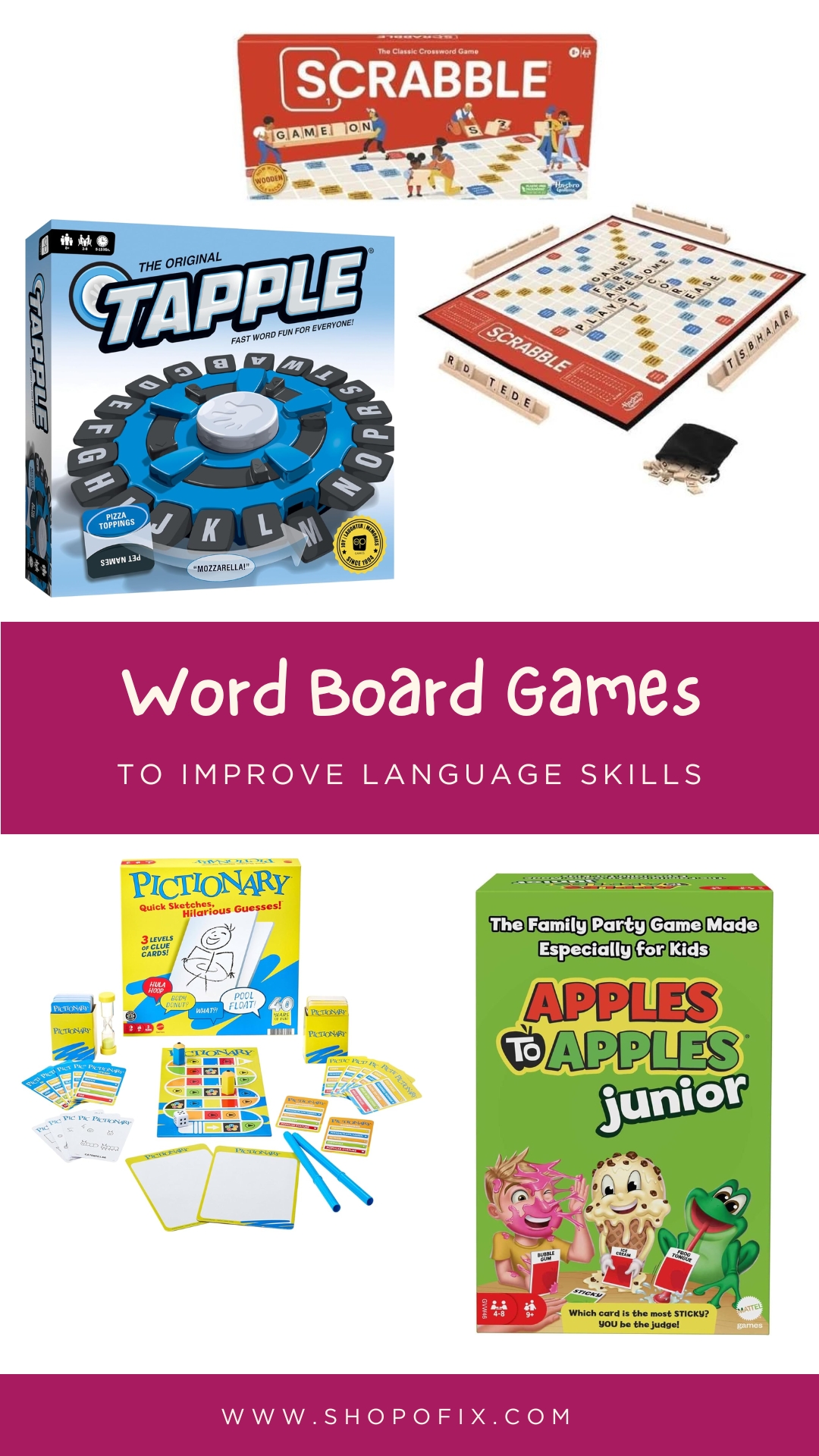
Recommendation Products
1. USAOPOLY The Original TAPPLE

A category appears, the timer starts, and suddenly everyone needs a word. TAPPLE gives players a simple challenge with a fast pace, using its electronic game wheel, category cards, and timer to keep each turn moving. Children ages 8 and up must recall suitable words quickly while also paying attention to letters that other players have already used. That combination makes each round a small test of vocabulary recall and quick decision-making.
The changing categories give players plenty of opportunities to think about different groups of words. A child may know many words but still need to choose quickly when the timer creates pressure. Parents can also help younger players understand unfamiliar vocabulary as new categories come up during family play. For children who enjoy competition and fast reactions, TAPPLE brings a lively language challenge to game night.
- Recommended Product: USAOPOLY The Original TAPPLE
2. Apples to Apples Junior

Sometimes the interesting part of a word game is not finding the word but explaining why it fits. Apples to Apples Junior uses word cards and player choices to create different combinations from one round to another. Children ages 9 and up can compare ideas, discuss their choices, and listen to how other players interpret the same words. The game therefore creates plenty of opportunities for conversation alongside vocabulary practice.
No two groups are likely to play exactly the same way because the cards create new combinations throughout the game. Children can discover new words while hearing different explanations from parents, siblings, and friends. The judging element also encourages them to think about how their choice might appeal to the person making the decision. For families who enjoy talking, laughing, and debating their choices, this game offers a more conversational approach to word play.
- Recommended Product: Apples to Apples Junior
3. Scrabble

Four players can look at the same collection of letters and create completely different strategies. Scrabble turns vocabulary into a board-building challenge where players arrange letter tiles to form words and use the board’s bonus spaces to pursue higher scores. Children ages 8 and up can play at their own level, while parents can introduce tools such as a dictionary when children encounter unfamiliar words. The game combines spelling, vocabulary, planning, and decision-making in every turn.
The scoring system adds another layer beyond simply knowing a long list of words. Players need to consider where a word can fit and how their move affects the available spaces for later turns. Younger players can focus on making valid words, while more experienced players can start thinking about board position and scoring opportunities. For families that enjoy slower games with more time to plan each move, Scrabble provides a very different experience from fast-paced word challenges.
- Recommended Product: Hasbro Gaming Scrabble Board Game
4. Pictionary

Words take on a completely different role when players have to draw them instead of spell them. Pictionary asks children ages 8 and up to communicate clues through pictures while teammates try to identify the target word. The game includes a board, clue cards, drawing materials, playing pieces, a timer, and instructions for group play. Because players must communicate without simply saying the answer, the game adds creativity and teamwork to its word-based challenge.
Artistic ability is hardly the main point here. A few simple lines can create a surprisingly funny guessing challenge, especially when teammates interpret the drawing in unexpected ways. Parents can also organize teams so younger players can work alongside older children and adults. Families looking for Word Board Games with more movement, conversation, and laughter may enjoy this format.
- Recommended Product: Pictionary

Which Word Game Matches Your Child’s Play Style?
Choosing a word game becomes easier when you look at how your child likes to play. Some children love racing against a timer, while others prefer planning, explaining, drawing, or debating their choices.
| Game | Main challenge | Play style |
|---|---|---|
| TAPPLE | Finding words quickly | Fast and competitive |
| Apples to Apples Junior | Connecting words and ideas | Social and conversational |
| Scrabble | Building and scoring words | Strategic and thoughtful |
| Pictionary | Communicating words through drawings | Creative and team-based |
This difference matters because vocabulary practice can feel very different from one game to another. A child who enjoys competition may respond well to TAPPLE, while a child who likes taking time to plan may prefer Scrabble. Pictionary suits children who communicate strongly through pictures, and Apples to Apples Junior gives more space for discussion and personal interpretation.
Four Different Ways Kids Can Work With Words
These games show that “word skills” cover more than spelling alone.
Quick Word Recall
TAPPLE gives children a limited amount of time to search their memory for a suitable word. The changing categories require players to move quickly from one group of vocabulary to another.
Word Connections
Apples to Apples Junior asks players to consider relationships between words and ideas. Children can hear several interpretations of the same card combination during one game.
Spelling and Word Building
Scrabble puts letters directly on the board. Players need to create valid words while also considering where those words should go.
Visual Communication
Pictionary removes much of the verbal explanation and replaces it with drawing. Children need to think about which visual clues can help their teammates identify a word.
Should You Choose a Fast or Slow Word Game?
Game speed can make a big difference during family game night. TAPPLE creates short, pressured turns, while Scrabble gives players more opportunity to examine their letters and plan a move. Apples to Apples Junior sits somewhere else because much of the fun comes from discussing and judging choices. Pictionary adds a physical and visual element as players draw and guess.
Think about the group before choosing. A family with energetic players may enjoy a game that keeps everyone moving quickly, while a quieter group may prefer a game that gives everyone more time to think. The number and ages of players also matter, especially when younger children are playing alongside older siblings or adults.
How to Make Word Games More Useful for Kids
Parents do not need to turn every game into a lesson. A few simple habits can add more language practice without interrupting the fun.
- Ask about unfamiliar words: If a child hears a new word, briefly explain what it means.
- Let children explain their choices: This works especially well with games that involve judging or comparing words.
- Use a dictionary when appropriate: Scrabble can become a natural reason to check a word’s meaning or spelling.
- Play in mixed-age teams: Older players can support younger children while everyone remains part of the game.
- Keep a small word list: Write down interesting new words that appear during play and discuss them later.
The goal is to keep the game enjoyable. When children discover new vocabulary while playing, the learning can happen naturally instead of feeling like extra homework.
Why These Games Feel Different From Vocabulary Worksheets
A worksheet usually gives children a clear question and an expected answer. Board games create a social situation where children must react to other players, make choices, communicate ideas, and sometimes change their strategy.
That difference can make language practice more active. Kids hear words from other players, explain their own thinking, and encounter vocabulary in different situations. They also get immediate feedback from the people around the table.
For parents searching for Word Board Games, the best starting point is therefore not simply asking which game teaches the most words. Consider what kind of thinking your child enjoys most. The right game can turn vocabulary, spelling, communication, and creativity into a regular part of family play.
Finding the right games for our 4-year-olds is all about keeping things simple, colorful, and fun enough to hold their short attention spans. But as the winter season rolls in and the days get much colder, there is nothing cozier than pairing game time with a warm blanket. To make your chilly afternoons even more magical, don’t miss our beautiful collection of children books about winter that are perfect for storytime!