
Put a board game on the table and something changes very quickly. Someone starts planning a move, another player watches closely, and suddenly everyone has an opinion about what should happen next. That is why Classic Family Board Games continue to have a place in family game nights, even when children have plenty of digital entertainment around them. These games create face-to-face moments where players must wait, make choices, react to other people, and sometimes accept an unexpected result. But “classic” does not mean every game feels the same.
One game may involve buying property, another may ask players to find hidden ships, while another can turn a simple row of colored discs into a serious two-player contest. The 9 games below cover different ages and different types of family play, so the interesting question is not whether classic games still work. It is which kind of classic game fits your family.
Classic Family Board Games for Kids and Adult
Recommendation Products
1. Sorry!

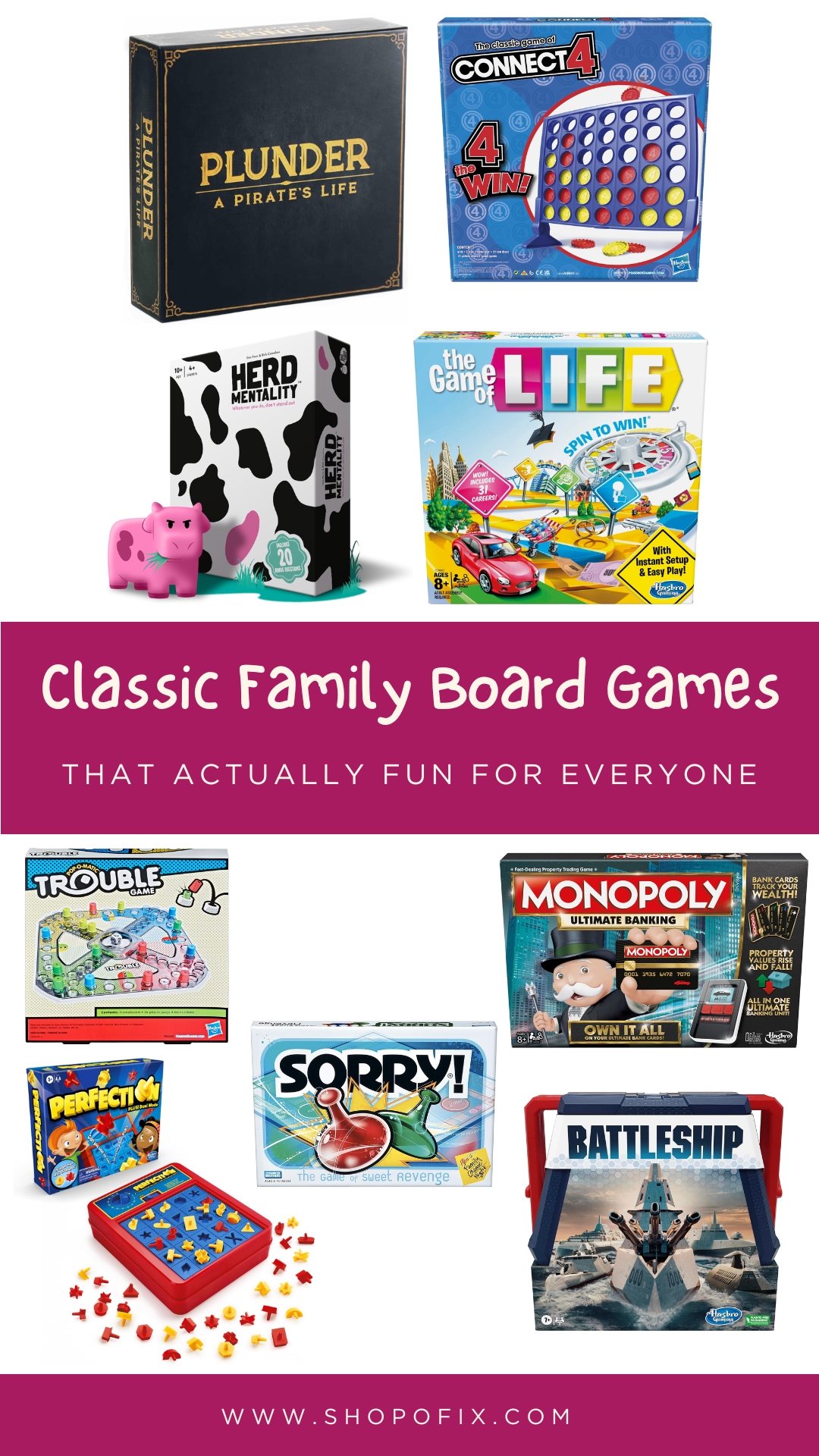
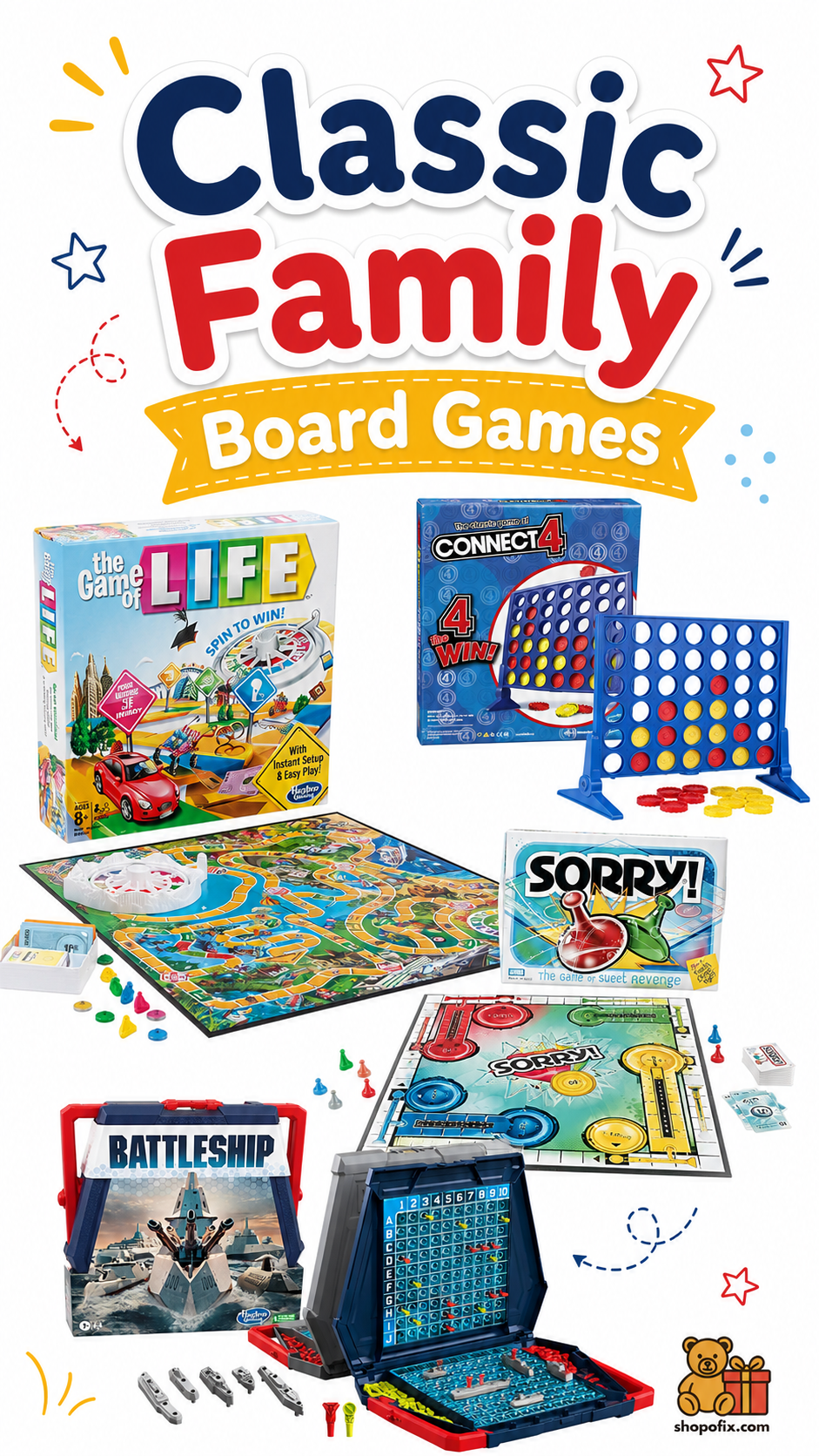
The race can change completely after one unexpected card. Sorry! Family Board Game gives players a colorful track, movement cards, and 16 pawns divided into four colors. Players move their pawns around the board while trying to reach the finish before the other players. The game supports up to four players, so several family members can join the same match.
The movement cards give each turn a clear decision. Players need to look at their available moves and decide which pawn should move next. The colorful pawns also make it easy for younger players to follow their own pieces. For families that enjoy friendly competition and changing game situations, Sorry! creates plenty of reasons to watch every turn.
- Recommended Product: Sorry! Family Board Game
2. Trouble

One button can make everyone around the table pay attention. Trouble uses the familiar Pop-O-Matic dice dome, colorful peg markers, and a compact game track for a race between players. Children aged five and up can press the dome, move their pieces, and follow the path during each round. The mechanical dice feature also gives the game a physical action that young players can enjoy.
The simple race format makes it easy to start a game without a long explanation. Players still need to wait for their turns and pay attention to where their pieces are on the board. The lightweight plastic design also makes the game easy to store when family game time ends. For younger players who enjoy pressing buttons and moving pieces, Trouble adds a physical element to a traditional board game.
- Recommended Product: Trouble
3. Battleship Classic

Forget racing to the finish. Battleship Classic Board Game asks players to find their opponent’s hidden ships instead. The set includes two folding tactical cases, miniature ships, hit markers, and miss pegs for head-to-head play. Players call out grid coordinates and use the results to work out where the opposing fleet is located.
The coordinate system makes every guess part of a larger plan. A player must remember previous calls and decide which area to target next. The folding cases also make the game easier to store or take on trips. For older children who enjoy deduction and direct competition, Battleship offers a very different experience from race-based board games.
- Recommended Product: Battleship Classic Board Game
4. The Game of Life

What happens when a board game asks children to make choices about an imaginary life? The Game of Life uses a colorful road board, spinning wheel, toy cars, family pegs, play money, careers, homes, and milestone cards. Players travel along the board while making choices connected to different parts of the game’s life journey. The format gives older children aged eight and up a playful way to explore a world built around career and financial decisions.
The game also creates plenty of conversation between players. Children can compare their different paths as they move through the board and collect game resources. The money, property, and career elements give the game more detail than a simple race. Families looking for a longer game with a strong story structure may find plenty to discuss while playing.
- Recommended Product: The Game of Life
5. Monopoly Ultimate Banking

Monopoly gets a different feel when paper money is replaced by electronic transactions. Monopoly Ultimate Banking Edition includes an electronic banking card reader, bank cards, property cards, Event cards, tokens, and dice. Players use the banking system while buying and managing properties during the game. The format gives the familiar property game a more modern setup.
The electronic system also changes how players handle their transactions. Instead of counting a pile of paper bills after every deal, players use the included bank cards and scanner. That can make the game feel faster for families who prefer less paperwork during play. Children aged eight and up can explore the game’s property and money system while staying involved in a competitive family game.
- Recommended Product: Monopoly Ultimate Banking Edition
6. Perfection

Not every classic game gives players time to think. Hasbro Perfection Game puts the focus on speed by giving players geometric pieces and a mechanical countdown timer. The game includes 25 shapes, a spring-loaded puzzle grid, and a pop-up tray. Players need to fit the shapes into their matching spaces before the timer creates another challenge.
The short, fast format makes Perfection very different from games such as Monopoly or The Game of Life. Children need to recognize shapes and place them quickly instead of planning a long sequence of turns. The pieces can be stored in the game’s internal compartment after the session. For children who prefer quick challenges over long board games, Perfection offers a more active tabletop experience.
- Recommended Product: Hasbro Perfection Game
7. Plunder

The family game table becomes a pirate map with Plunder. The game includes an ocean board, pirate ships, crew figures, and treasure tokens that players use during competitive island adventures. Children aged ten and up can take part in a game that focuses on resources, ships, and tactical decisions. The larger board also gives the game a more involved setup than a simple card-based activity.
Players have to pay attention to what is happening across the game area. The combination of ships, crew, and treasure gives each session several pieces to manage. The sturdy cardboard board and miniature ships also make the game feel like a full tabletop experience. Families with older children and teenagers may enjoy this option when they want something more involved than a quick race game.
- Recommended Product: Plunder
8. Connect 4 Classic Grid

Four discs in a row can create a surprisingly serious family competition. Connect 4 Classic Grid uses a vertical frame, support legs, a release lever, and 42 colored discs. Players take turns dropping their discs into the columns while trying to create a matching row. The upright board also lets players see the developing pattern clearly after every move.
The game rewards players who watch the whole grid rather than focusing only on their own pieces. A move can create an opportunity for one player while also blocking another. Because each round can move quickly, families can play several games without committing to a long session. For children aged six and up, Connect 4 offers a simple introduction to two-player strategic thinking.
- Recommended Product: Connect 4 Classic Grid
9. Herd Mentality

Some family games are less about winning through a board position and more about understanding what other people will say. Herd Mentality asks players to give answers to questions and see whether their responses match the group. The game includes question cards, cow tokens, a pink cow figure, and answer pads. It supports larger groups of four to twenty players, according to the supplied product information.
That group format makes the game different from two-player classics such as Battleship or Connect 4. Players need to think about the question and also consider what other people might choose. The answer pads give everyone a way to record their responses before comparing them. For family gatherings with many players, Herd Mentality can create a more social type of game night.
- Recommended Product: Herd Mentality
Nine Games, Nine Very Different Family Nights
Calling these games “classic” can make them sound similar, but their actual gameplay is very different.
| Game | Main type of play | Suggested age in the supplied information |
|---|---|---|
| Sorry! | Racing and movement cards | 6+ |
| Trouble | Racing and Pop-O-Matic dice | 5+ |
| Battleship | Deduction and coordinates | 7+ |
| The Game of Life | Decisions and life-themed play | 8+ |
| Monopoly Ultimate Banking | Property and electronic banking | 8+ |
| Perfection | Fast shape matching | 4+ |
| Plunder | Pirate strategy and resources | 10+ |
| Connect 4 | Two-player pattern strategy | 6+ |
| Herd Mentality | Group answers and social play | 10+ |
The table shows why age alone does not tell the whole story. A child may be old enough for a particular game but prefer a completely different type of challenge. Someone who loves fast action may enjoy Perfection, while another child may happily spend much longer thinking about Battleship or Plunder.
When Your Family Wants a Quick Game
Not every family game night needs to last an hour. Trouble, Connect 4, Perfection, and Pop-style games such as Sorry! can fit naturally into shorter sessions because their core actions are easy to understand. Players can finish a round and decide whether they want another one. That makes them useful when children have limited attention or when the family has only a short amount of free time.
Quick games also make it easier for children to play several rounds with different family members. A child can play Connect 4 with one parent and then challenge a sibling. Perfection can work as a fast individual challenge rather than requiring a large group. Choosing a game with a simple setup can make spontaneous game time much easier.
When You Want a Longer Family Game
Some evenings are better suited to games that give players more decisions. The Game of Life, Monopoly Ultimate Banking, Battleship, and Plunder all provide more information or choices for players to manage. The longer format gives families more time to talk, react, and follow what happens across the game.
The type of decision also changes from game to game. Battleship focuses on finding hidden positions, while Monopoly involves properties and electronic transactions. The Game of Life follows a broader journey across the board, and Plunder uses ships, crew, and treasure. That variety lets families choose a longer game based on the type of thinking they enjoy.
Classic Games That Work for Different Group Sizes
The number of players can change the whole experience. Battleship and Connect 4 create direct two-player contests, while Sorry! can support up to four players. Herd Mentality is designed for much larger groups, making it more suitable for family gatherings where several people want to join.
A smaller group often allows each player to make more decisions without waiting too long. Larger groups create more conversation and social interaction. Before choosing a game for family night, check how many people usually play together. The right player count can make the game much easier to enjoy.
Why Do Classic Board Games Still Bring Families Together?
The appeal is not only about the game itself. These products give families a reason to sit in the same place and react to the same events. Someone may celebrate a lucky move, question a decision, or suddenly change their strategy after seeing another player’s action. Those small interactions are part of what makes a shared game different from playing alone.
Each game creates those moments in its own way. Battleship creates questions and guesses, Monopoly creates buying decisions, Connect 4 creates quick reactions, and Herd Mentality creates funny disagreements about what the group will choose. That is why a family does not need one “perfect” board game. Different nights can call for different kinds of play.
Before You Pick Your Next Classic Game
Start with how your family actually plays. Do the children like quick rounds or longer sessions? Do they enjoy competition, guessing, building a strategy, or simply making everyone laugh? The answers can narrow the choices much faster than looking only at the age number on the box.
Also think about the table, storage space, and number of players. Games with many small pieces need a place where everything can stay together. Larger games may need more table space, while compact games can be easier to bring on trips. Checking the manufacturer’s current age guidance and instructions is also important before introducing a game to younger children.
The Game Night Starts Before Anyone Rolls the Dice
The interesting part of a family board game is often the conversation that starts before the first move. Someone has to choose a game, another person claims a color, and everyone begins wondering who will win. That small routine can turn an ordinary evening into shared time around the same table.
These nine games give families very different ways to start that moment. You can hunt for hidden ships, build a row of four, manage imaginary property, race pawns, solve group questions, or simply try to beat the clock. So instead of asking which classic game is the “best,” ask a more useful question: What kind of game night does your family want tonight? Once you know that, choosing the box becomes much easier.
Gathering everyone around the table for an old-school game night is the ultimate way for moms, dads, and kids to bond and make sweet, lifelong memories. However, if the rules of the older games are still a bit too complicated for your littlest ones to join in happily, upgrading to simplified versions is a lifesaver. Take a look at these wonderful junior board games that are specifically designed to make sure no one gets left out of the fun!