


Are you looking for a game that truly challenges your older child to think ahead and plan their moves? Strategy Board Games are designed to develop high-level thinking, planning, and decision-making skills. Players must think several turns into the future and decide the best way to use their resources to win.
These games are incredibly rewarding because your child feels smart and proud when their complex plan works out perfectly! They teach patience and critical evaluation of different choices. Playing a strategy game is a great way to stimulate your child’s mind and encourage them to become a clever, thoughtful planner.
Strategy Board Games for Kids
Recommendation Products
1. CATAN

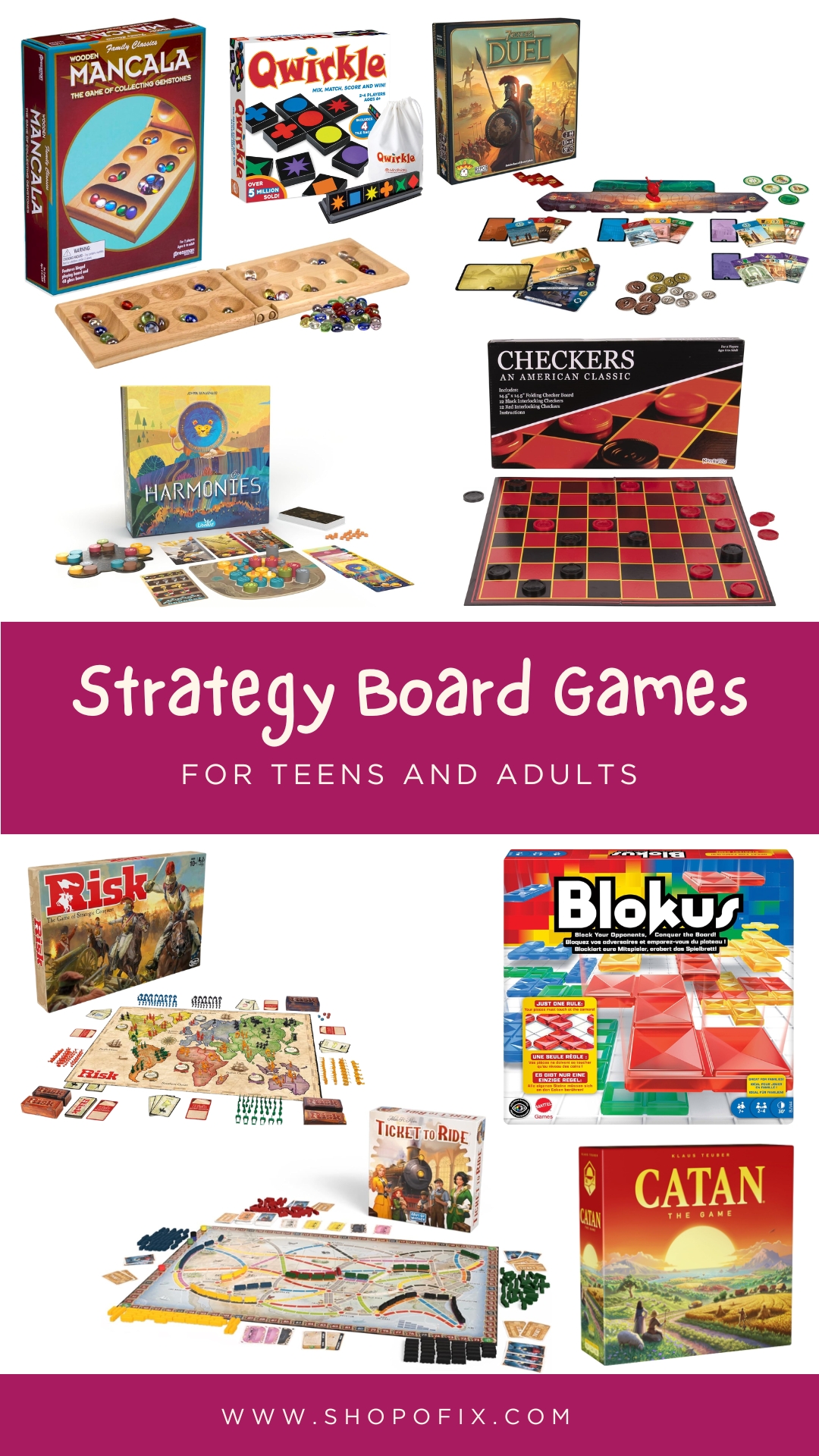
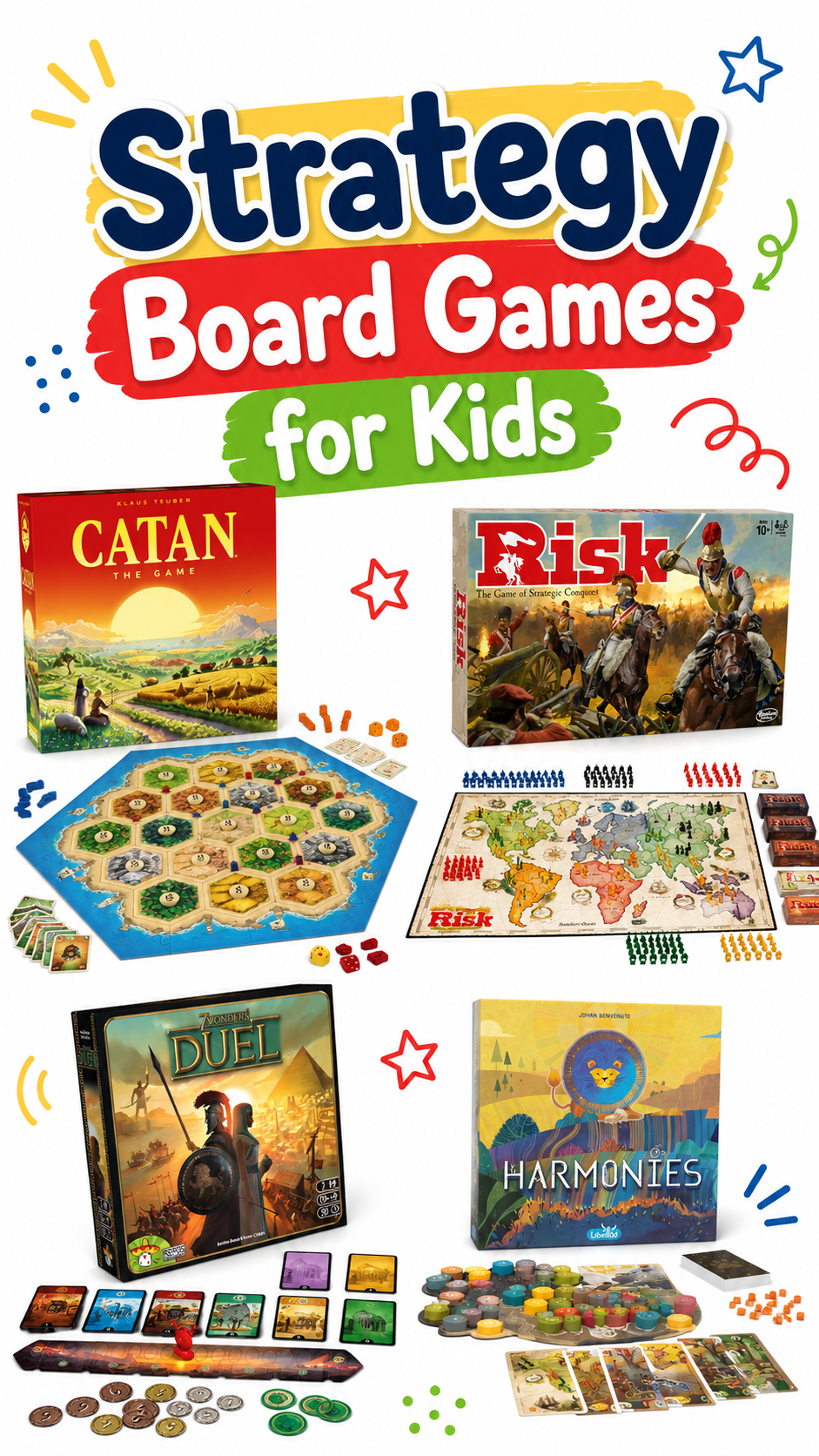
In CATAN The Game, building a settlement is only one part of the challenge. Players must decide how to use the resources they collect, which areas to develop, and when to trade with other players. You may have enough resources to build a road but need a different combination of cards to expand your settlement. Trading becomes an important part of the experience because another player may have exactly what you need, but they will expect something useful in return.
The modular board also prevents every game from feeling identical. The position of resource-producing areas and the numbers connected to them can influence how players approach the game from the beginning. A player who starts with a strong location may still need to adapt when other players block routes or control important resources. CATAN is a good option for older children and families who enjoy games where planning, negotiation, and changing circumstances all matter.
- Recommended Product: CATAN The Game
2. Ticket to Ride

A railway map might look simple at first, but Ticket to Ride becomes more challenging when several players want to use the same connections. Each player has destination tickets that influence their goals, then collects train cards to claim routes between cities. The problem is that waiting too long can allow another player to take the route you need. You must decide whether to secure an important connection early or collect more cards before committing to a plan.
The game can also introduce children to the idea of having an alternative route. If a preferred connection is no longer available, players need to look at the map and find another way to complete their destination tickets. The rules are accessible enough for beginners, but the decisions become more interesting as players learn to observe their opponents. Ticket to Ride suits families who want a strategy game with a clear objective, colorful components, and a theme based on travel and railway networks.
- Recommended Product: Ticket to Ride
3. Blokus

Blokus begins with a simple idea: place your colored pieces on the board while making sure your own pieces touch only at the corners. The challenge becomes more apparent after the first few turns, when the available spaces start to disappear. A large piece may help you occupy more space, but it can also make it harder to reach another area of the board. Players need to consider not only where a piece fits now, but also where their remaining pieces might go later.
The different shapes make every turn a spatial puzzle. Sometimes a small piece can open a useful path, while a larger piece may help you reach a distant corner before another player gets there. You can also choose to expand quickly or place pieces in ways that limit an opponent’s options. Blokus is worth considering for children who enjoy puzzles, geometric shapes, and games where a small placement decision can affect the rest of the board.
- Recommended Product: Mattel Blokus
4. Qwirkle

Qwirkle turns matching colors and shapes into a game of timing and placement. Players create lines by arranging tiles that share a color or a shape, following the game’s matching rules. The interesting part is that a tile may fit in several places, and choosing one location can change the scoring possibilities for the next turn. Children must look at the existing lines and decide which placement offers the most useful result.
The game does not require a large board filled with complicated instructions, which makes it approachable for family play. However, the choices become more difficult when the table contains several lines and the player has fewer suitable tiles. Children can learn to look for patterns, compare possible moves, and avoid placing a useful tile too quickly. Qwirkle may be a good match for players who like matching games but are ready for more decision-making than simply finding identical pieces.
- Recommended Product: Qwirkle Board Game Strategy Game
5. Kangaroo

If your family already enjoys checker-style games, Kangaroo introduces a different way to think about capturing pieces. Instead of relying on traditional checker jumps, the game uses a special “sandwich” capture rule. This means that players must pay attention to how their pieces and their opponents’ pieces are positioned on the board. A move that appears harmless may create a capture opportunity for the next player.
The unusual rule is what gives Kangaroo its own identity. Players cannot depend entirely on strategies they have learned from traditional checkers, so they need to understand how the special capture system works through practice. The board supports two to four players, which can change how players approach positioning and blocking. Kangaroo may be an interesting choice for families who want a competitive board game with a familiar checker-like format but a different set of tactical decisions.
- Recommended Product: Kangaroo – Multiplayers Strategy Checker Board Game
6. Mancala

The small stones and rows of pits in Mancala make the game look easy to understand, but the movement of the pieces requires careful counting. Players pick up stones from one pit and distribute them according to the rules, paying attention to where the final stone lands. That final position can affect whether a player earns stones, creates another opportunity, or changes the situation for the next turn. The result is a game where counting and planning are closely connected.
Mancala is also different from board games that rely on cards, dice, or large collections of pieces. The board stays relatively simple, allowing players to focus on the movement of the stones and the consequences of their choices. Beginners can learn the basic process first, then start thinking about how one move may influence several turns ahead. It is a practical option for families who want a compact classic game that combines hands-on play with basic number skills.
- Recommended Product: Pressman Games Mancala Board Game
7. Risk

Risk is built around a world map, territories, and the challenge of deciding where to place and move armies. Players cannot protect every area equally, so they must consider which territories are important and how much attention each one needs. Expanding into a new area may create an advantage, but it can also leave another part of the map less protected. The game encourages players to think about the relationship between attack, defense, and the number of pieces they have available.
Risk also involves uncertainty because dice are used during battles. A carefully planned attack does not always produce the expected result, which means players must be ready to adjust their plans. The longer format may be more suitable for older children, teenagers, and adults who are comfortable with extended game sessions. Families should consider the playing time and strategic complexity before choosing Risk for younger players.
- Recommended Product: Risk The Game of Strategy Conquest
8. 7 Wonders Duel

7 Wonders Duel creates a close competition between two players, with both participants choosing cards from a shared arrangement. The available cards change as players take them, so selecting one card can affect which options become accessible next. You may want a card because it provides a resource, but taking it might also give your opponent access to another useful card. Every choice involves considering both your own development and what the other player might gain.
The game gives players several ways to build their civilization, which means there is no single approach that always works. One player may focus on scientific progress, while another may pay more attention to resources or military strength. Because the game is designed for two players, each decision has a direct effect on the opponent’s opportunities. 7 Wonders Duel may appeal to older children and adults who enjoy focused competition and want a strategy game specifically designed for two people.
- Recommended Product: Asmodee 7 Wonders Duel
9. Harmonies

Asmodee Harmonies takes a different approach to strategy by asking players to build landscapes using colorful tiles. Instead of controlling armies or competing for railway routes, players arrange different landscape elements and work toward creating habitats that meet the requirements of animal cards. The position of each tile matters because the layout can affect which combinations are possible later. Players must think about how individual pieces work together within the larger landscape.
The nature theme gives the game a different atmosphere from strategy games focused on direct conflict. However, the placement decisions still require attention and forward planning. A player may need to choose between completing a current scoring opportunity and leaving room for a more useful arrangement later. Harmonies could be a good choice for children and families who enjoy visual puzzles, creative layouts, and strategy games that focus on building rather than attacking.
- Recommended Product: Asmodee Harmonies Board Game
How to Choose the Right Strategy Board Games for Kids
1. Start With the Type of Challenge Your Child Enjoys
The word strategy covers many different types of gameplay. A child who enjoys arranging shapes may find Blokus more interesting than a game focused on negotiation, while someone who likes maps and travel may prefer Ticket to Ride. CATAN involves resources and trading, Mancala uses counting and turn planning, and Harmonies focuses on arranging landscapes. Looking at the actual challenge behind the game can help you choose something that matches your child’s interests.
You can also pay attention to how your child responds to mistakes. Some children enjoy trying a different placement after a move does not work, while others prefer a game with more predictable rules and shorter turns. Choosing a challenge that feels interesting rather than overwhelming can make it easier for children to stay involved.
2. Consider How Much Time You Have for Playing
A game may be enjoyable but still unsuitable for a family that has only a short amount of free time. Some board games can be introduced during a brief session, while others may require a longer period to complete. Risk, for example, can involve extended gameplay and several stages of decision-making. CATAN and 7 Wonders Duel also offer more systems to learn, so the first few sessions may take longer as players become familiar with the rules.
Think about when the game will be used most often. A shorter game may work better after school, while a longer strategy game may be more appropriate for a weekend or holiday. It is also useful to check the manufacturer’s estimated playing time instead of assuming that every family game will take the same amount of time.
3. Choose a Game That Fits Your Group
The number of players can change the experience considerably. 7 Wonders Duel is intended for two players, so it can work well for a parent and child or two siblings. Other games, such as Blokus, CATAN, Qwirkle, and Kangaroo, can offer a different experience when more people join. More players may create additional competition, while two-player games can make each decision more direct.
Before purchasing, consider who is most likely to play the game regularly. If you want something for family gatherings, check whether the game supports enough players. If you are looking for an activity to share with one child, a two-player game may be more convenient.
4. Match the Complexity to Your Child’s Experience
Some strategy games have simple basic rules but offer more difficult decisions after a few rounds. Blokus and Qwirkle are examples of games where players can learn the core mechanics fairly quickly but still need practice to understand more effective strategies. Other games, such as CATAN, Risk, and 7 Wonders Duel, involve more systems that may require additional explanation.
You do not have to teach every rule at once. Parents can introduce the basic gameplay, play a practice round, and explain more complicated situations when they appear. This approach may help children understand the game through actual examples rather than memorizing a long set of instructions before they begin.
5. Think About the Components and Storage
Board games can include cards, tokens, tiles, stones, army pieces, and other small components. If the pieces are not organized after each session, setting up the game again may take longer and some parts may become difficult to find. Consider whether the original packaging provides enough space and whether you need separate bags or small containers for sorting.
The size of the board is another factor to consider. Games such as Risk may require a larger table with enough room for pieces around the board, while Mancala may need less space. Check the product details and think about where the game will be played and stored before making your choice.
Strategy Board Games for Kids Comparison Table
| Game | Main Gameplay Focus | Player Format | Best Suited to |
|---|---|---|---|
| CATAN | Resource collection, trading, and settlement building | Up to 4 players | Families who enjoy negotiation and planning |
| Ticket to Ride | Railway routes and destination planning | Group play | Children interested in maps and travel themes |
| Blokus | Spatial arrangement and blocking | 2–4 players | Puzzle and shape enthusiasts |
| Qwirkle | Color and shape matching | Group play | Players who enjoy patterns and tile placement |
| Kangaroo | Positioning and special capture rules | 2–4 players | Fans of checker-style strategy games |
| Mancala | Counting, stone movement, and turn planning | Usually 2 players | Beginners and families who enjoy classic games |
| Risk | Territory control and long-term decisions | Group play | Older children and experienced players |
| 7 Wonders Duel | Card selection and civilization development | 2 players | Two-player strategy sessions |
| Harmonies | Landscape arrangement and habitat building | Check product details | Players who enjoy visual puzzles and creative layouts |
Final Thoughts
The nine games in this guide offer different ways for children to experience strategy. CATAN uses resources and trading, Ticket to Ride focuses on railway connections, and Blokus challenges players to use space carefully. Qwirkle and Mancala use relatively simple components but require players to think about timing and future moves, while Risk and 7 Wonders Duel offer more involved gameplay for older or more experienced players. Harmonies provides another option for children who prefer building and arranging landscapes.
When choosing among these Strategy Board Games for Kids, focus on the type of challenge your child enjoys rather than selecting a game only because it is described as educational. Check the age recommendation, player count, estimated playing time, and component requirements. A suitable game should offer enough challenge to keep children interested while remaining manageable for the people who will play it.
If your children also enjoy building projects and creative activities, take a look at our recommendations for the best Lego Christmas sets for more family-friendly gift ideas.