
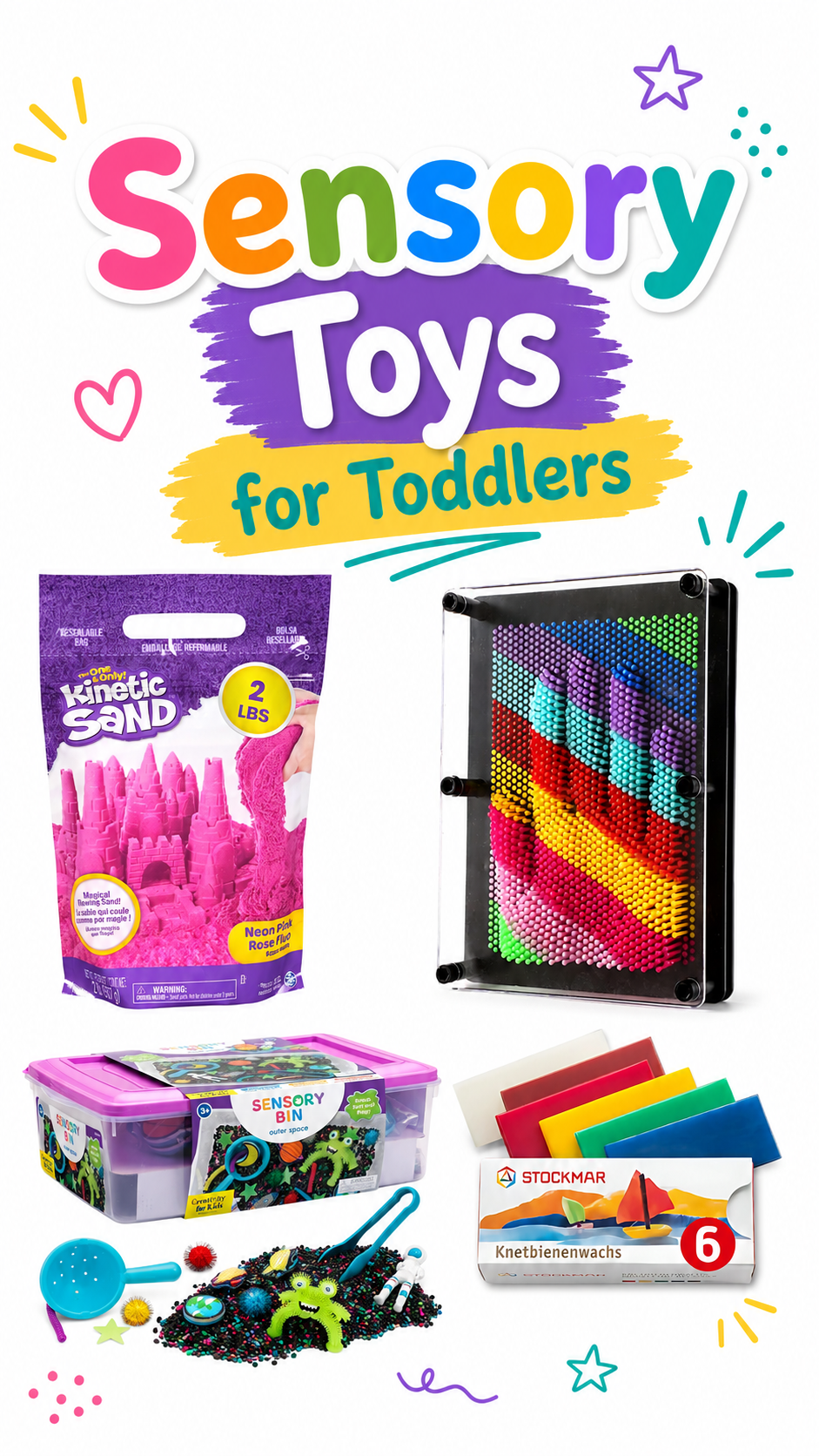
Finding good sensory toys for toddlers can be harder than it looks. Some toys focus on touch, while others involve movement, sounds, colors, or hands-on building. Parents also want toys that give children something useful to do instead of simply keeping them busy for a few minutes. The 15 picks below cover many types of sensory play, from soft fabric books and squishy toys to kinetic sand, fidget toys, and active movement.
The interesting part is that sensory play does not have to look the same for every child. One toddler may enjoy squeezing a soft ball, while another may spend much longer stretching a pop tube or shaping modeling beeswax. Some children prefer quiet activities, while others need more movement. This list gives you different options so you can see which type of play may fit your child best.
Sensory Toys for Toddlers

Recommendation Products
1. Slime in a Tin

Slime gives children a simple way to explore texture with their hands. The soft and stretchy material can be squeezed, pulled, twisted, and shaped during play. The product comes in a reusable metal container, which makes storage simple after the activity. It is intended for children ages 3 and up and can work well for quiet sensory play with adult supervision.
The hands-on texture also gives children many ways to create their own play activities. They can stretch the slime into long pieces or press it into different shapes. A clean play surface makes cleanup easier for parents. If your child enjoys tactile activities, Crazy Aaron’s Thinking Putty offers an easy option to add to a sensory toy collection.
- Recommended Product: Crazy Aaron’s Thinking Putty
2. Squishy Gel Fidget Sensory Tube

A gel-filled tube gives little hands something interesting to squeeze, press, and roll. The colorful gel moves inside the soft outer tube as children manipulate it. Its lightweight design also makes it easy to carry in a backpack or travel bag. Children can use it during quiet play, travel, breaks, or other moments when they want a hands-on activity.
The changing movement inside the tube adds another layer to the play experience. Children can focus on how the gel moves while using their hands at the same time. Parents should keep the toy away from sharp objects and store it in a cool, dry place. Squishy Gel Fidget Toy can be a practical choice for children who enjoy tactile toys they can take with them.
- Recommended Product: Squishy Gel Fidget Toy
3. Squishy Stress Relief Balls
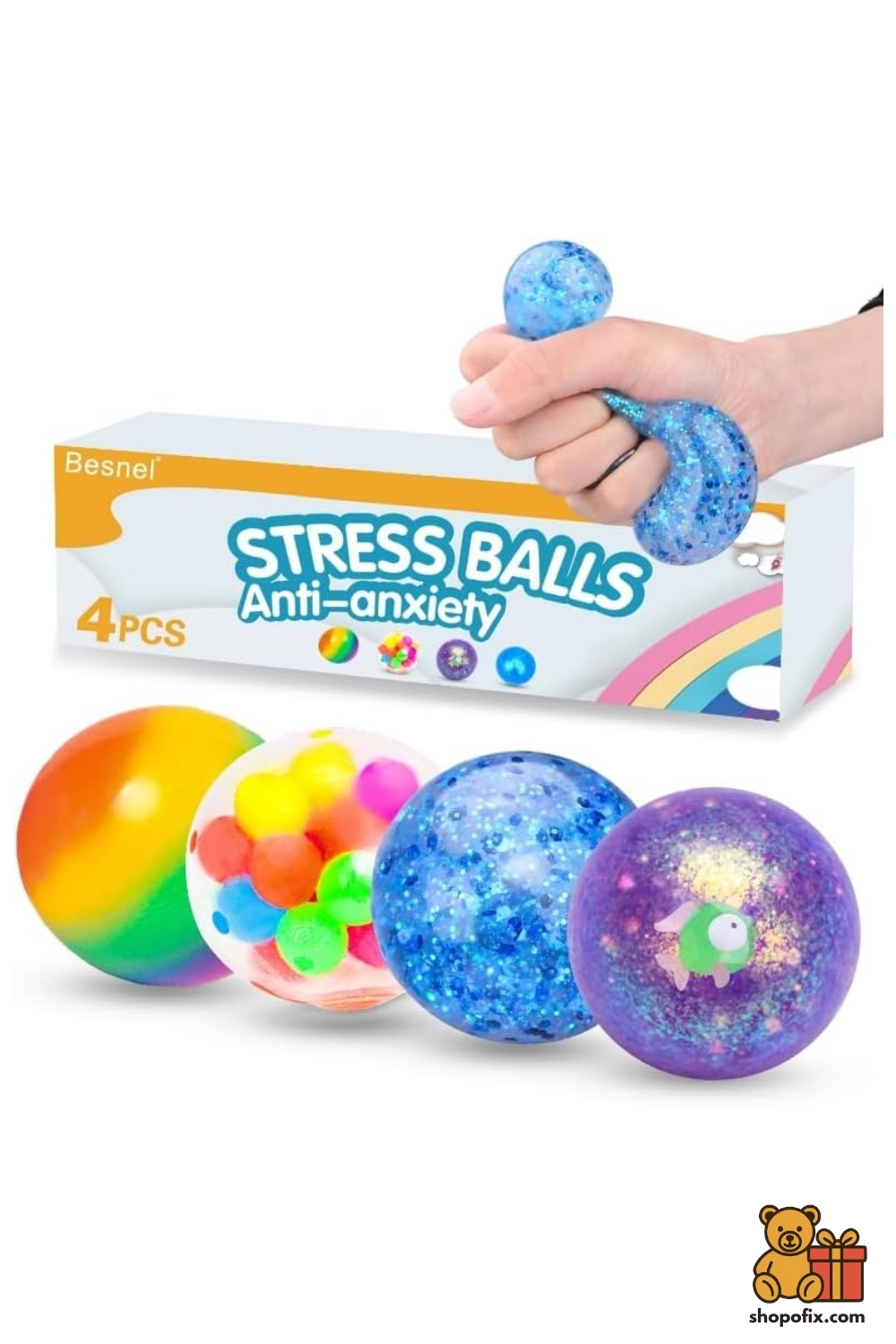
Sometimes the simplest toy gives children plenty of ways to play. These soft, flexible balls can be squeezed, pressed, rolled, or gently tossed during different activities. Their texture gives children a direct tactile experience while the squeezing action involves their hands and fingers. They can also fit easily into home play areas, travel bags, or short activity breaks.
Different colors and textures can add variety when children play with several balls together. Your child can squeeze one ball while sitting quietly or roll it across the floor during active play. A damp cloth can help keep the balls clean after use. Squishy Stress Relief Balls are a straightforward choice for parents who want an easy sensory activity without a complicated setup.
- Recommended Product: Squishy Stress Relief Balls
4. Kinetic Sand
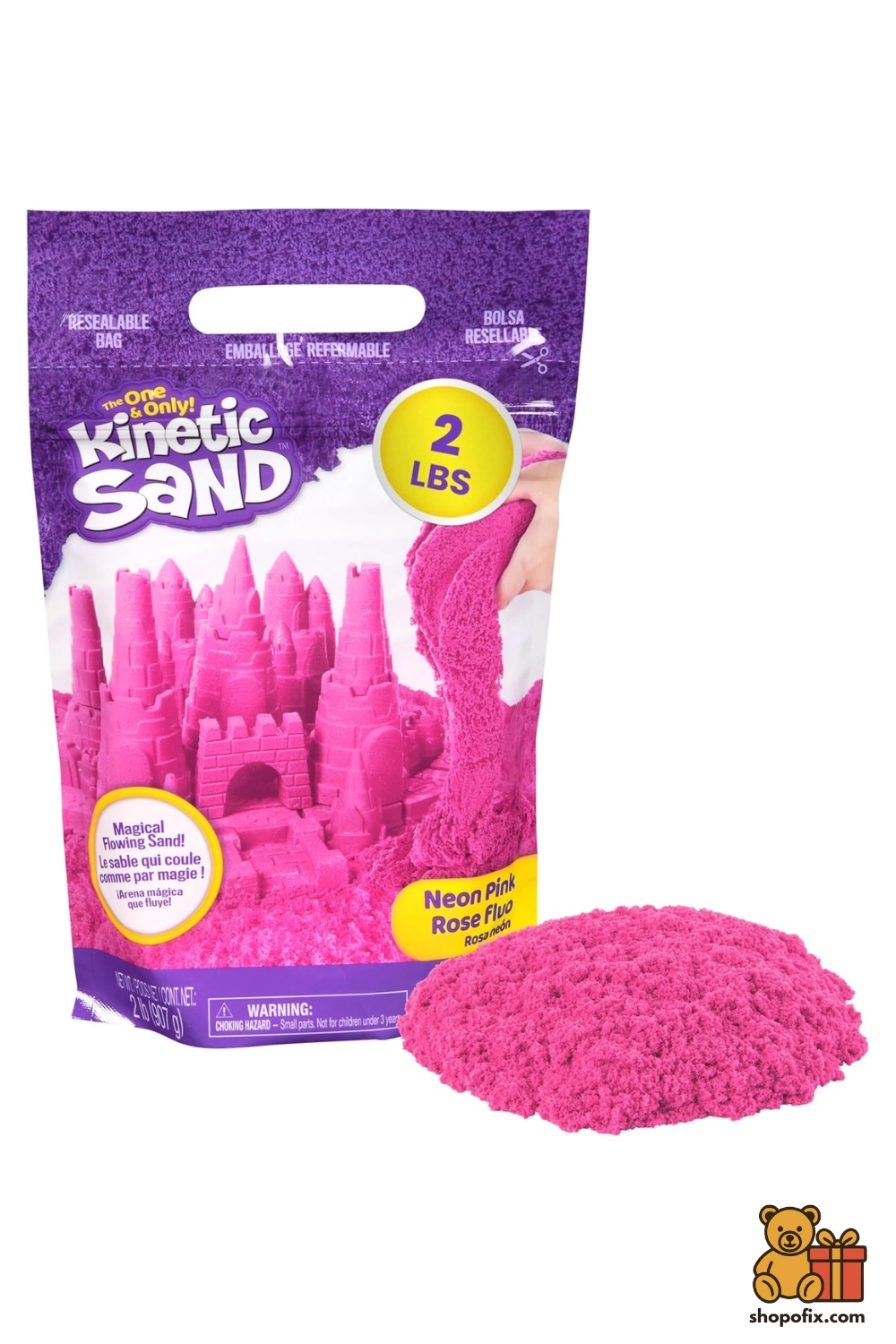
Kinetic sand brings sensory play together with creativity. Children can squeeze, mold, scoop, and shape the soft sand with their hands or simple tools. They can create castles, animals, patterns, and other designs, then start again with the same material. The moldable texture makes it suitable for indoor sensory activities and creative play.
This type of activity gives toddlers something to explore while also encouraging them to make their own creations. Parents can add scoops and molds to introduce different ways to use the sand. Keeping it in a sealed container after play helps keep the material clean and ready for another session. Kinetic Sand is especially useful for children who enjoy messy-feeling play but prefer a more controlled activity.
- Recommended Product: Kinetic Sand
5. Express Your Feelings With Sensory Bottles

Sensory bottles offer a different type of experience because children watch instead of constantly touching or squeezing. These bottles contain colorful liquid, glitter, and moving objects that children can observe as they shake and settle. The slow movement can create a calming visual activity during quiet moments. Parents can also use the bottles when talking with children about different feelings.
The activity becomes even more useful when parents join the play. Ask your child what they see or how the bottle makes them feel as the contents move. Keep the bottles tightly closed and store them somewhere safe when they are not being used. Hand2Mind Sensory Bottles can work well for families looking for a sensory activity that combines visual exploration and simple conversations.
- Recommended Product: Hand2Mind Sensory Bottles
6. Modelling Beeswax

Modelling beeswax gives children a creative way to explore texture while working with their hands. The soft material can be rolled, shaped, and formed into simple objects such as animals or flowers. Children can also combine different colors to create their own designs. These activities involve hand strength, fine motor movements, and creative thinking.
Parents can turn the activity into a simple conversation, too. Ask your child what they made and why they chose certain colors. Keeping the beeswax in its original container or a sealed box helps maintain its texture between activities. Stockmar Modelling Beeswax is a nice option for children who enjoy making things with their hands.
- Recommended Product: Stockmar Modelling Beeswax
7. Mathlink Cubes

Sensory play does not always need soft or squishy materials. Mathlink Cubes combine hands-on movement with early learning through colorful pieces that snap together and pull apart. Children can build towers, sort colors, count pieces, and create simple patterns. These actions give little hands plenty to do while introducing early math concepts.
Parents can adjust the activity as their child develops new skills. Start with simple color sorting or counting, then move toward patterns and basic shapes. Keeping the cubes in a storage container helps prevent pieces from getting lost. Mathlink Cubes are a useful choice for families who want sensory play to include an educational activity.
- Recommended Product: Mathlink Cubes
8. Pop Tubes Sensory Toys

Pop tubes give children something they can stretch, bend, compress, twist, and connect. Each movement creates a different tactile experience, while the popping sound adds an auditory element. Children can also connect multiple tubes and make simple shapes or structures. This makes the toy more interactive than a product that only offers one type of movement.
The colorful design can keep the activity interesting through repeated play. Parents can encourage children to create sound patterns or work together to connect several tubes. Store them in a toy basket or bin when playtime ends. Bunmo Poppin Pop Tubes can suit children who enjoy movement, sounds, and hands-on experimenting.
- Recommended Product: Bunmo Poppin Pop Tubes
9. Fidget Slug Toy

The Fidget Slug Toy focuses on repetitive hand movement. Its linked sections bend, twist, and move while producing gentle clicking sounds. Children can keep moving the segments in different directions as they explore how the toy feels and sounds. The lightweight design also makes it convenient for travel and quiet activities.
This toy can be especially interesting for children who like repeating the same hand movement again and again. They can bend the slug into different positions without needing a large play area. Parents can keep it in a backpack for car rides, appointments, or other waiting periods. Cevoice Rainbow Fidget Slug Toy gives children a compact sensory activity they can use in many settings.
- Recommended Product: Cevoice Rainbow Fidget Slug Toy
10. 3D Pin Art Needles Fidget
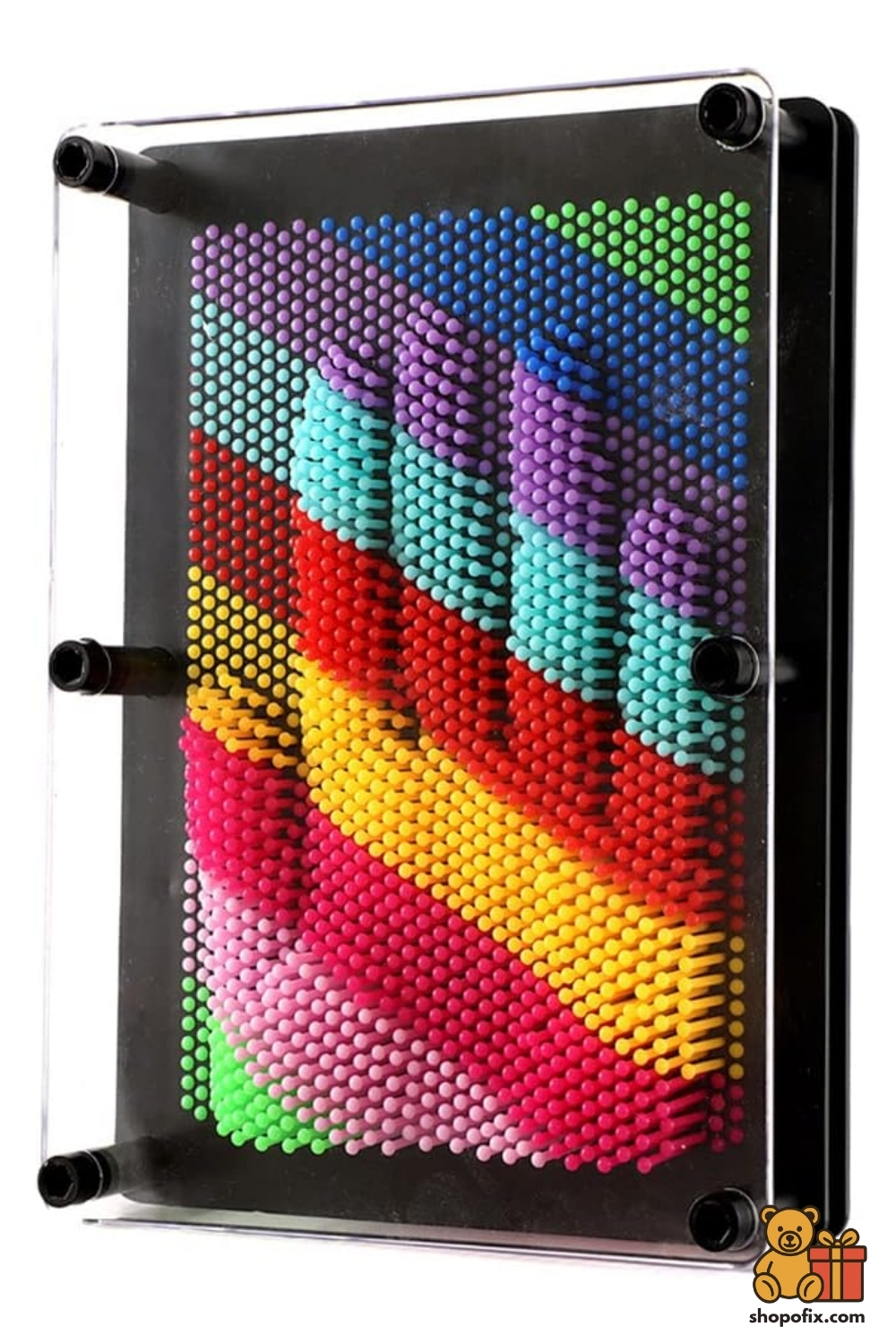
Pin art gives children a visual result from a simple hands-on action. Pressing a safe object against the pins creates a three-dimensional impression that children can see through the clear frame. They can experiment with different objects and compare the shapes they create. This turns a basic pressing activity into a small exploration of shapes and patterns.
Parents should supervise younger children while using this toy. Encourage gentle pressing rather than using too much force with fingers. The transparent frame makes it easy for children to watch each new impression appear. The 3D Pin Art Needles Fidget can appeal to curious children who enjoy cause-and-effect activities.
- Recommended Product: 3D Pin Art Needles Fidget
11. Sensory Bin Squishy Pebbles
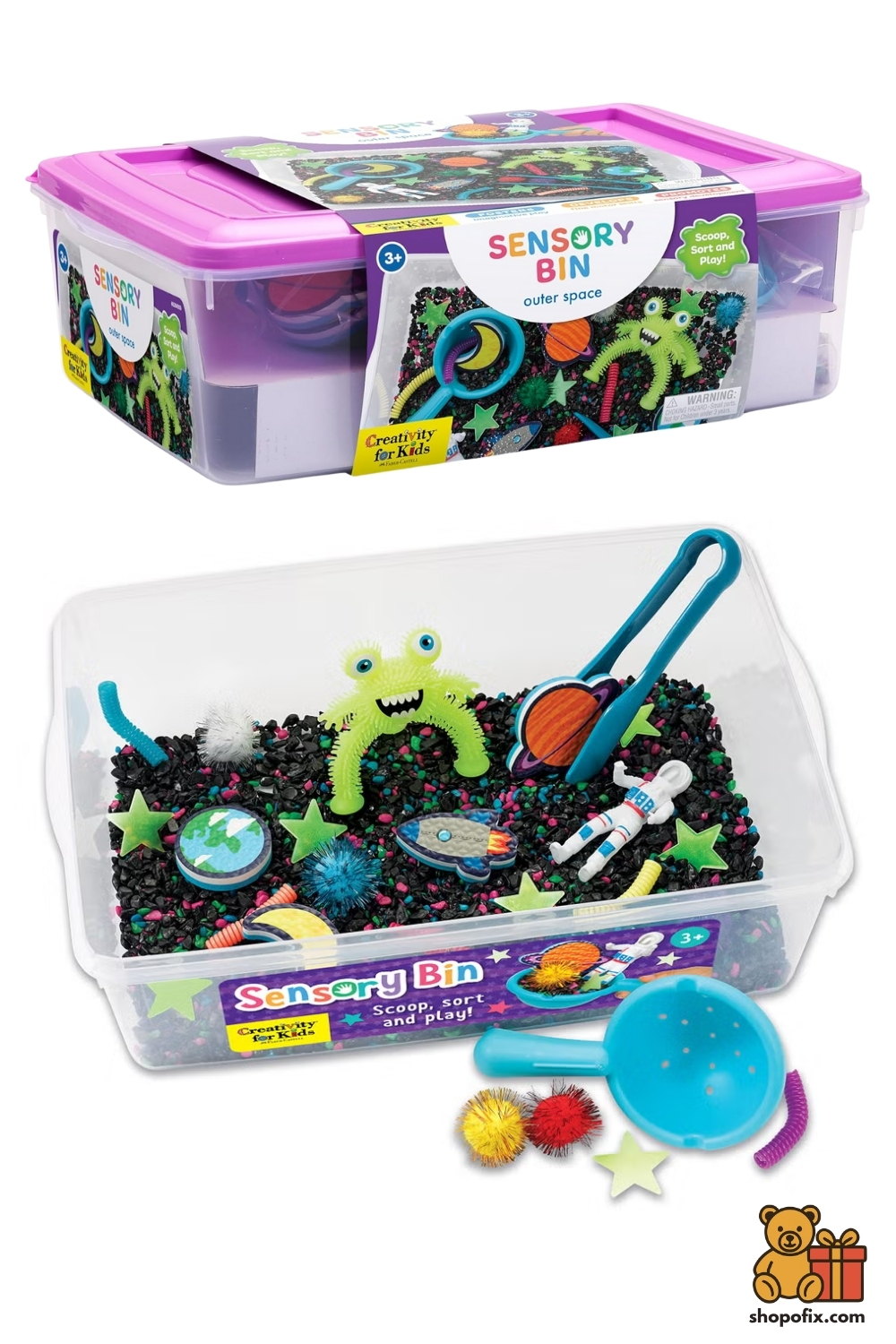
Squishy pebbles can turn a simple sensory bin into a hands-on sorting activity. Children can squeeze, touch, sort, and transfer the colorful pieces using cups or other sensory tools. These actions give them different ways to explore texture and color while practicing small hand movements. The outer-space theme can also add an extra play idea for children who enjoy themed activities.
Parents can create several simple games with the same set. Ask children to group colors, move the pebbles between containers, or create their own sensory scene. Store the pieces in a sealed container after play and supervise younger children because some pieces may be small. Sensory Bin Squishy Pebbles are a flexible option for families who enjoy building different sensory activities at home.
- Recommended Product: Sensory Bin Squishy Pebbles (Outer Space Theme)
12. theFube 12-Sided Fidget Cube
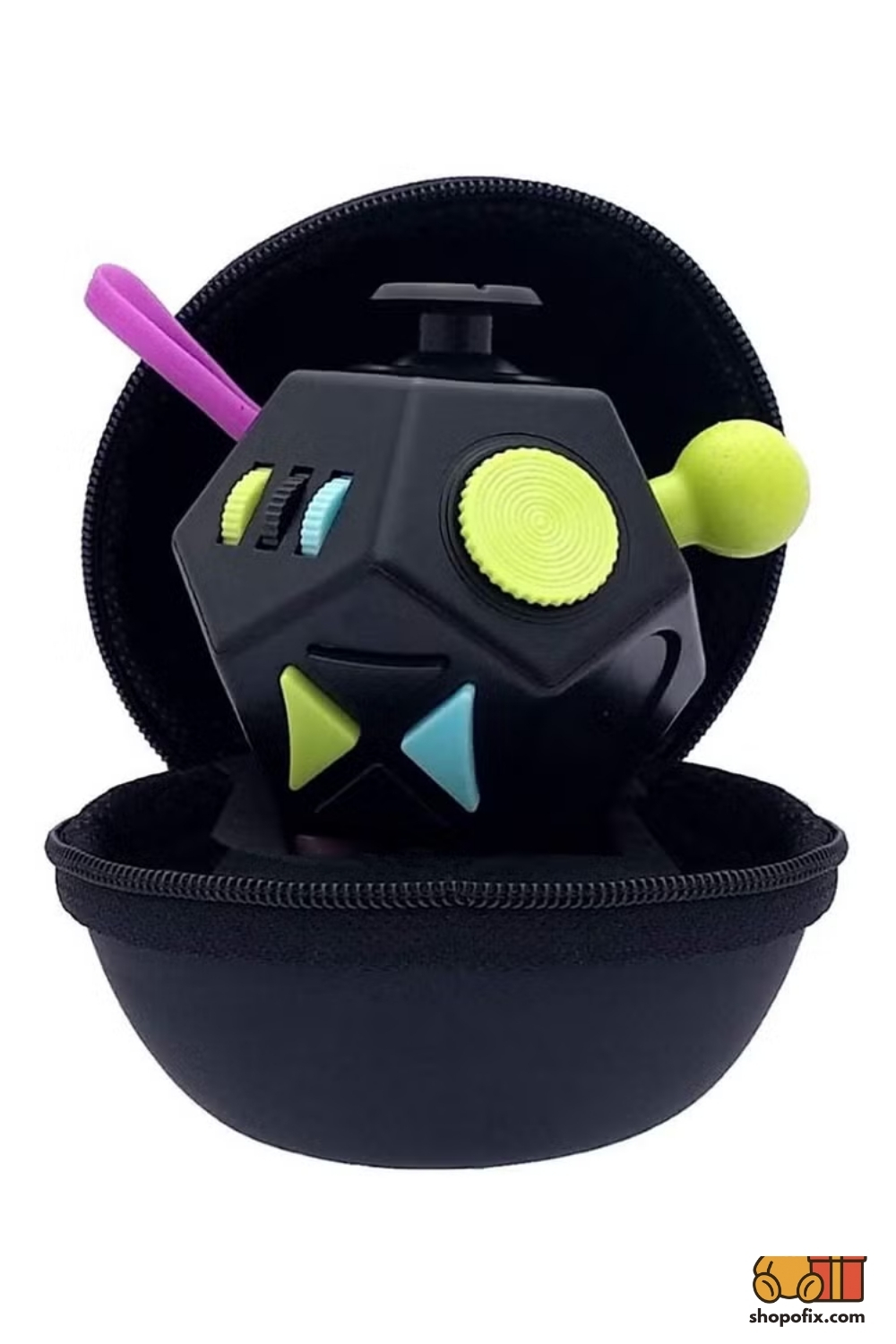
Why buy several small fidget toys when one cube can offer multiple activities? TheFube 12-Sided Fidget Cube features buttons, switches, rollers, spinning parts, and textured surfaces across its different sides. Children can move from one activity to another without changing toys. Its compact size also makes it easy to keep in a backpack, drawer, or travel bag.
The variety is the main attraction here. A child can press a button, spin a part, then try another side when they want a different movement. Parents can bring the cube along for travel or quiet moments outside the home. PilPoc Fidget Cube offers a compact way to introduce several tactile activities in one toy.
- Recommended Product: PilPoc Fidget Cube
13. Rainbow Fabric Ball

A sensory toy does not always need to stay on a table. The Rainbow Fabric Ball lets children roll, toss, catch, or squeeze a lightweight ball covered with colorful fabric panels. The soft panels give little hands a different surface to touch while the ball encourages physical movement. Children can use it indoors, outdoors, or during simple movement games with family members.
The ball also gives parents an easy way to combine sensory and gross motor activities. Younger children can practice rolling it, while older toddlers can try simple catching games. Its lightweight design makes it suitable for many early movement activities. HABA Rainbow Fabric Ball is a good option for children who enjoy active play more than sitting with a tabletop toy.
- Recommended Product: HABA Rainbow Fabric Ball
14. My First Soft Book (Set of 6)

Books can also become sensory toys when they include textures, sounds, and interactive pages. My First Soft Book Set includes six fabric books with colorful illustrations, crinkle pages, different textures, and simple themes. Babies and toddlers can touch the pages while looking at the pictures and listening to a parent read. The lightweight design also makes the books convenient for tummy time, bedtime, stroller rides, and travel.
The soft pages are easy for little hands to handle during early reading activities. Different textures give children another reason to explore each page instead of only looking at pictures. Parents can keep the books in a low basket so children can choose one during quiet time. TeyToy Soft Book is a thoughtful choice for families who want sensory play and early reading to happen together.
- Recommended Product: TeyToy Soft Book
15. Trampoline for Kids

Some children enjoy sensory play most when they can move their whole body. A kids’ trampoline gives them an active way to jump while working on balance, coordination, and leg movement. A typical model may include a steel frame, jumping mat, padded edges, handlebar or safety net, and non-slip feet, depending on the design. The source product is intended for children ages 3 and up with adult supervision.
Parents should check the frame and jumping surface regularly and follow the product’s safety instructions. Allowing one child to jump at a time can also help create a more controlled play environment. The compact size can work in a playroom or garden, depending on the model and available space. Vevor 36-Inch Trampoline for Kids is an option for energetic children who enjoy movement-based sensory activities.
- Recommended Product: Vevor 36-Inch Trampoline for Kids
Which Type of Sensory Toy Fits Your Toddler?
The biggest difference between these products is the type of sensory experience they offer. Some focus mainly on touch, while others add movement, sound, visual effects, creativity, or early learning.
| Sensory Play Type | Products to Consider | What Children Can Do |
|---|---|---|
| Tactile play | Slime, squishy balls, gel tube | Squeeze, stretch, press, roll |
| Creative play | Kinetic Sand, Modelling Beeswax | Shape, mold, build, create |
| Visual sensory play | Sensory Bottles, Pin Art | Watch movement, create patterns |
| Fine motor play | Mathlink Cubes, Fidget Cube | Connect, press, spin, sort |
| Sound + movement | Pop Tubes, Fidget Slug | Stretch, bend, click, connect |
| Active sensory play | Rainbow Fabric Ball, Trampoline | Roll, catch, jump, move |
| Early reading | Soft Books | Touch, look, listen, turn pages |
This variety matters because toddlers do not all enjoy the same type of activity. A child who loves squeezing may enjoy squishy balls or slime, while another child may prefer building with cubes or moving through an active game.
How to Choose Sensory Toys for Toddlers
Start with the type of activity your child already enjoys. If your toddler likes touching different surfaces, tactile toys such as slime, beeswax, or squishy materials may be a natural starting point. Children who enjoy movement may respond better to a fabric ball or trampoline.
Also consider where you plan to use the toy. Compact fidget toys can work well for travel and waiting periods, while kinetic sand and sensory bins usually need a dedicated play area. Soft books can fit into bedtime or quiet routines, while active toys need more physical space.
Think About Supervision
Parents should always check the recommended age and follow the manufacturer’s instructions. Some products in this list contain small pieces or have specific supervision needs. The source specifically recommends adult supervision for products such as slime, pin art, squishy pebbles, and the trampoline.
It also helps to inspect sensory toys regularly. Look for damage, loose parts, or changes in the material before giving the toy to your child. Store each product properly after play so it stays clean and ready for the next activity.
Build a Small Sensory Play Collection
You do not need every type of sensory toy at once. Start with two or three products that offer different experiences. For example, combine a tactile toy such as a squishy ball with a creative activity such as kinetic sand and a quiet option such as a soft book.
As your child shows new interests, you can add another type of play. A fidget cube can add hand-based activities, while a fabric ball can introduce more movement. A small collection with different play styles can give toddlers more opportunities to explore.
Choose the Play Style, Not Just the Toy
The best sensory toy for your toddler depends on how they like to explore. Some children want to squeeze and stretch. Others prefer building, watching, reading, or moving around.
These Sensory Toys for Toddlers offer many ways to create hands-on activities at home, during travel, or as part of a daily routine. Look at the texture, movement, size, activity level, and supervision needs before choosing. When the play style matches your child’s interests, even a simple toy can become an activity they want to repeat.
Watching our little ones explore different textures, shapes, and colors is such a beautiful and peaceful part of early childhood development. As they grow a bit older and start diving deep into imaginative role-play, introducing classic characters can make their playtime even more magical. If you want to see their faces light up, don’t miss our ultimate guide to the best barbie toys that every child will love!