

Puppet theaters give children a simple place to turn their ideas into stories. Instead of only watching a show, kids can become the storyteller, performer, director, or even the audience. They can create characters, change their voices, make up conversations, and decide what happens next. That makes puppet theaters for kids a fun choice for children who enjoy pretend play and storytelling.
There are many different styles to choose from, including wooden stages, portable pop-up theaters, classroom-friendly designs, and play centers with more than one function. Some include chalkboards where children can write the show title, while others offer reversible signs, colorful backdrops, curtains, or additional play areas. The seven options below cover several play styles, so you can find a puppet theater that fits your child’s space, interests, and age.
Puppet Theaters for Kids

Recommendation Products
1. Alvantor® Pop Up Puppet Show Theater & Lemonade Stand
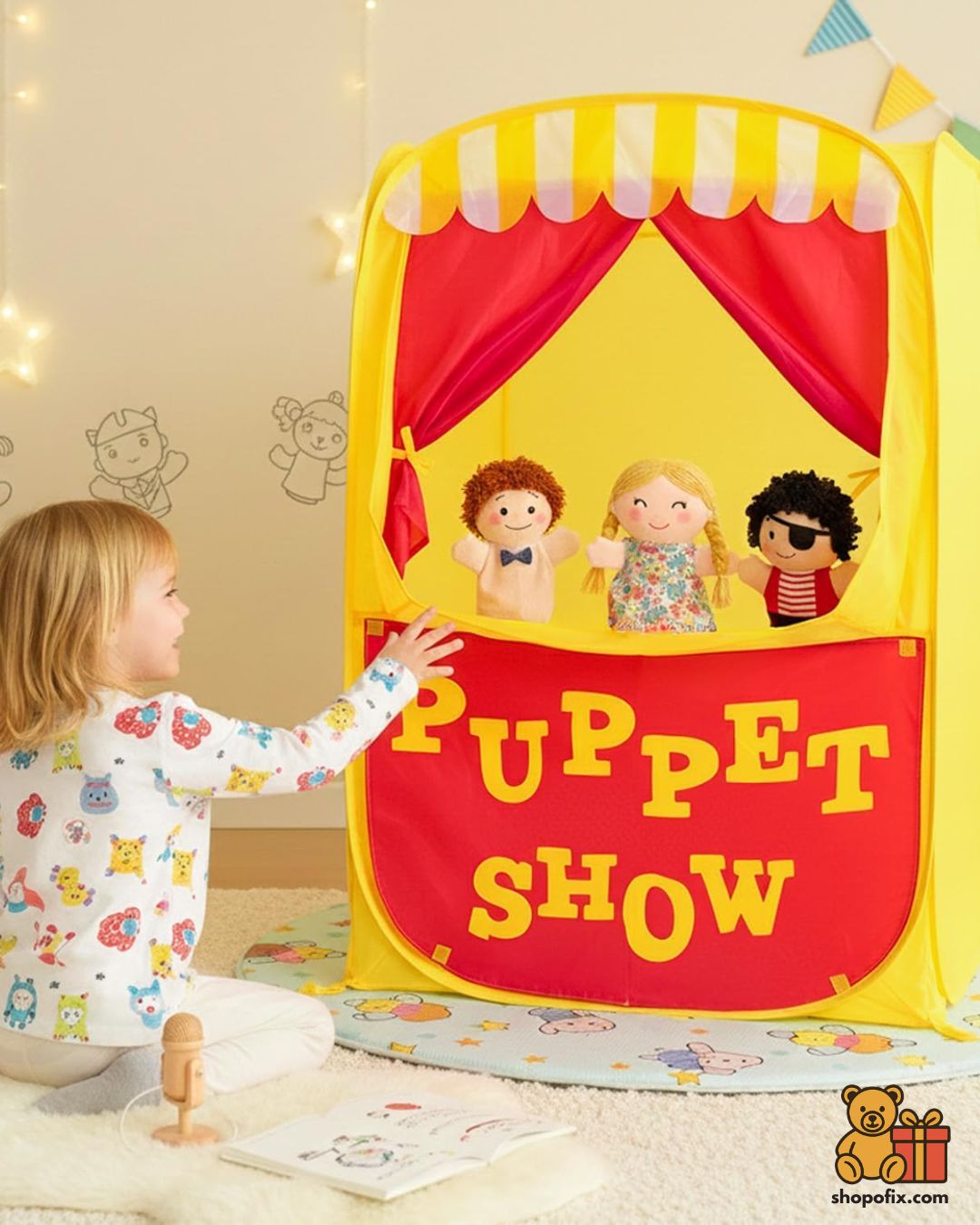
A traditional puppet stage can be fun, but the Alvantor® Pop Up Puppet Show Theater & Lemonade Stand gives children another way to play. Its reversible design lets kids switch between a puppet theater and a lemonade shop, giving them two pretend-play settings in one product. The storefront window and changing signs encourage children to create different stories as they move between the two activities. It is especially interesting for kids who enjoy changing roles and making up their own games.
The lightweight pop-up structure also makes this option convenient for families who do not want a permanent wooden theater taking up floor space. It features a pop-up frame, a reversible fabric sign panel, and a storefront window, while the fabric construction can be folded flat for storage. You can keep it under a bed or in another small storage area when playtime is over. The flexible design also makes it suitable for indoor or outdoor play, giving children more opportunities to use their imagination in different settings.
- Recommended Product: Alvantor® Pop Up Puppet Show Theater
2. Bluey Wooden Puppet Theater for Kids

Young Bluey fans can bring their favorite characters into their own storytelling sessions with the Bluey Wooden Puppet Theater for Kids. The colorful stage features Bluey-themed artwork, giving children a familiar setting for creating their own shows. The wooden structure includes a movable rolling curtain that children can open and close as they perform. With two colorful backdrops included, kids can also change the look of their stage while creating different stories.
The sturdy natural wood framework makes this a nice choice for a dedicated play area or bedroom. Children can play independently or invite siblings and friends to take part in their shows. The curtain system gives them a simple way to begin and finish each performance, which can make pretend play feel more organized. When the show is over, the theater can remain on a toy shelf or another suitable area where it is ready for the next performance.
- Recommended Product: Bluey Wooden Puppet Theater
3. HEY! PLAY! Puppet Theater for Kids

For children who enjoy putting on organized performances, the HEY! PLAY! Puppet Theater for Kids offers several useful features in one stage. The wooden theater has a hand-painted framework, tie-back silk curtains, and a chalkboard on the front. Kids can write the name of their show, announce a performance time, or use the board as part of their pretend theater. The bright primary colors also give the stage a classic children’s theater appearance.
The chalkboard adds another activity beyond puppet play, especially for children who are beginning to practice writing. They can create pretend tickets, write character names, or announce the next show before raising the curtains. The interlocking wood pieces are designed for assembly without complicated adult tools, making setup more manageable for families. Once assembled, the stable base allows the theater to be used on a table or floor, depending on the child’s play area.
- Recommended Product: HEY! PLAY! Puppet Theater for Kids
4. Chiuhei Deluxe Wooden Puppet Theater

Children who enjoy creating their own shows with siblings may appreciate the Chiuhei Deluxe Wooden Puppet Theater. Its design includes a sturdy wooden frame, silk curtains, and a bottom chalkboard where children can write the name of their performance. The chalkboard gives kids another way to participate in the production, even when they are not holding the puppets. They can decide what the show is called, create simple announcements, and prepare the stage before the performance begins.
The durable wooden construction makes this theater suitable for regular play at home. Its heavy non-tip frame is designed to remain stable during performances, while the neutral wooden structure can fit naturally into different playroom styles. Children can take turns controlling puppets, performing characters, or helping prepare the show, which creates opportunities for shared play with siblings and friends. For families looking for a more substantial wooden theater that can become a dedicated part of a playroom, this deluxe model is an appealing option.
- Recommended Product: Chiuhei Deluxe Wooden Puppet Theater
5. Le Toy Van – Wooden Educational Puppet Theatre

The Le Toy Van Wooden Educational Puppet Theatre combines storytelling with a detailed stage design that gives children plenty of room for pretend performances. It features a reversible wooden sign panel, a snack window, and detailed theater illustrations that make the stage feel like a small play environment. Children can use the different areas while creating stories around their puppet characters. The snack window also adds another role-playing element that can be incorporated into their imaginary shows.
Its educational focus makes it particularly suitable for children who enjoy learning through pretend play. Kids can practice vocabulary as they name characters, describe scenes, and create conversations between puppets. The theater is finished with non-toxic water-based paints, according to the supplied product information, and has a colorful design that can attract young storytellers. Placing the stage on a stable, flat surface gives children easy access while keeping the theater ready for another afternoon of creative play.
- Recommended Product: Wooden Educational Puppet Theatre
6. Kids Grocery Store Pretend Play, Puppet Theater & Grocery Store

Why choose between a puppet theater and a pretend shop when children can have both in one play center? The Kids Grocery Store Pretend Play, Puppet Theater & Grocery Store features a reversible setup with a supermarket counter on one side and a performance stage on the other. This gives children more than one way to use the same structure during pretend play. They can spend one afternoon running a pretend grocery store and another putting on a puppet show for family members.
The double-sided design can also be useful for homes where floor space is limited. The compact wooden structure can be positioned against a playroom wall when children are finished playing, while the smooth painted surfaces can be wiped with a damp cloth. Switching between the grocery store and theater gives kids opportunities to take on different roles and create new scenarios. It is a practical choice for children who enjoy variety and may quickly move from one type of pretend play to another.
- Recommended Product: Kids Grocery Store Pretend Play
7. Wood Designs Deluxe Puppet Theater – Flannel Puppet Theater with 2 Chalkboards

Classrooms, preschools, and larger play areas may benefit from a theater designed with group activities in mind. The Wood Designs Deluxe Puppet Theater features a wide anti-tip base, soft flannel curtains, and two chalkboards on the front. The larger stage gives children plenty of room to perform while teachers or parents can use the chalkboards for show titles, schedules, or other simple activities. Its wooden construction also gives it a more permanent classroom-theater feel.
The chalkboards can become part of the performance rather than simply serving as decoration. Children can write ticket prices, show names, character lists, or pretend announcements before their classmates take their seats. Group performances also give children opportunities to take different roles, such as performer, narrator, ticket seller, or audience member. For classrooms and families looking for a larger puppet theater that supports group storytelling, this design offers several ways to organize creative play.
- Recommended Product: Wood Designs Deluxe Puppet Theater
What Can Kids Do With a Puppet Theater?
A puppet theater can support much more than a single puppet show. Children can create stories based on everyday situations, invent completely new characters, or act out familiar stories with their own endings. They can also switch roles throughout the activity, giving different children a chance to perform and control the story. Even a simple five-minute performance can become a longer activity when children start adding new characters and situations.
The theater itself can also become part of the game. Kids can decide on a show title, prepare the curtains, create tickets, announce the performance, and invite family members to watch. A chalkboard theater gives them an extra space for writing, while a shop-style theater can introduce completely different pretend-play scenarios. These extra elements help children use the stage in different ways instead of repeating the same type of performance every time.
Wooden vs. Pop-Up Puppet Theaters
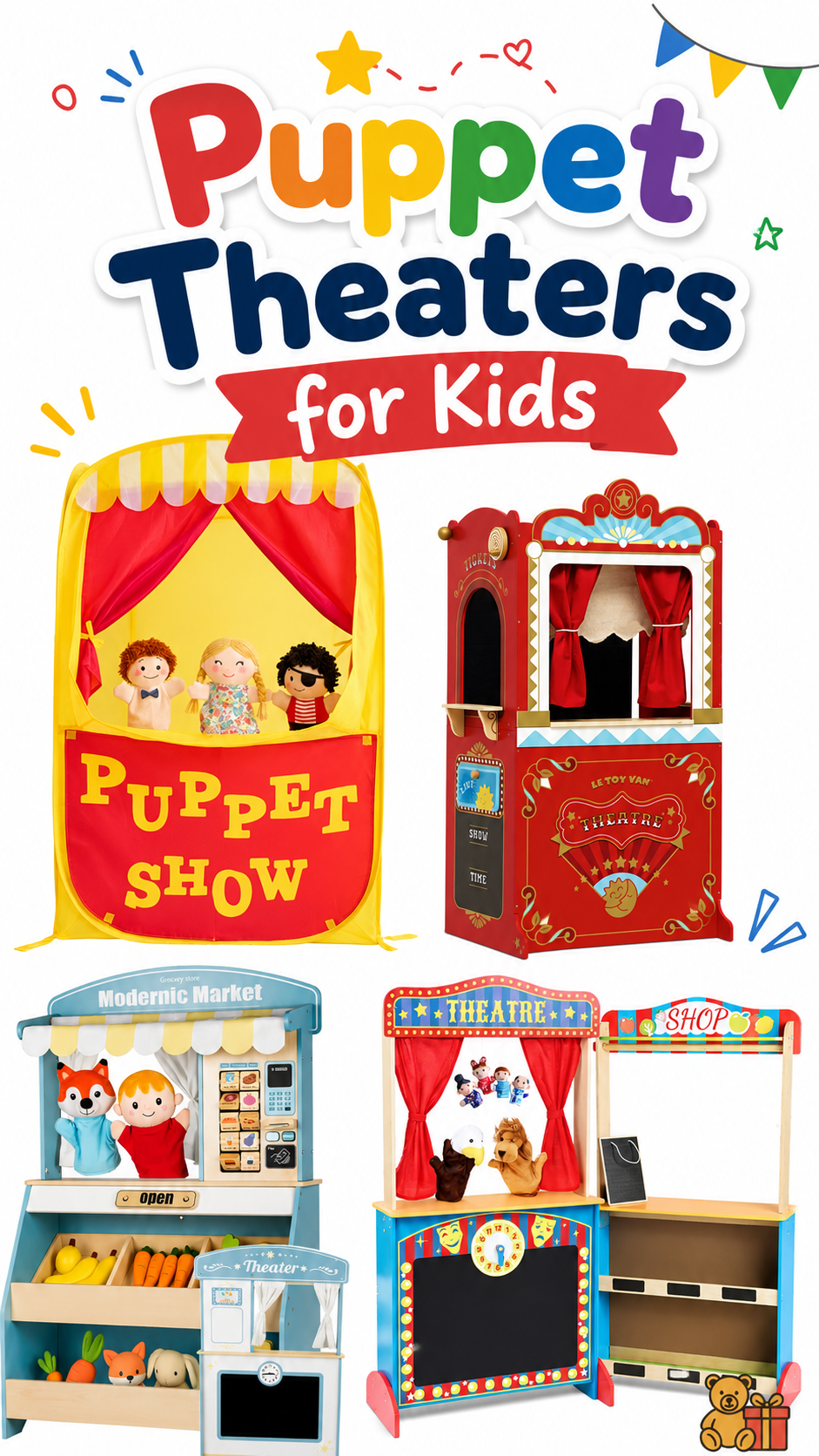
Wooden puppet theaters are a good choice when you have a dedicated play area and want a stage that can stay assembled. Models such as the Bluey, HEY! PLAY!, Chiuhei, Le Toy Van, and Wood Designs theaters provide a more traditional stage setup with wooden frames and curtains. They can become a permanent part of a bedroom, playroom, classroom, or nursery. The added structure also gives children a clear place to perform and organize their shows.
Pop-up theaters offer a different advantage because they are easier to fold and store when the play session is finished. The Alvantor model, for example, has a lightweight pop-up structure that can be folded flat, making it useful for families with limited storage space. This type of design can also be easier to move between rooms or take outdoors. The right option depends mainly on whether you prefer a permanent stage or something that can be packed away quickly.
Puppet Theaters for Siblings and Friends
Puppet shows become even more interesting when several children participate together. One child can operate the puppets while another provides the voice, and a third child can act as the narrator. They can also take turns performing different characters, preparing the stage, or acting as the audience. This simple division of roles gives children a reason to communicate and cooperate during play.
A larger wooden stage can be especially useful when siblings or classmates regularly play together. The Wood Designs theater, for example, provides a larger stage suitable for group activities, while the Chiuhei and HEY! PLAY! models give children a dedicated performance space at home. Even smaller stages can support shared play when children take turns rather than trying to perform simultaneously. With a little organization, one puppet theater can become a shared activity for the whole family.
Puppet Theater Ideas for Different Ages
Younger children may enjoy simple performances where they move a puppet and repeat familiar words or sounds. A colorful theater with easy-to-use curtains can give them a clear starting point without making the activity too complicated. As children become more comfortable with storytelling, they can begin creating longer conversations and deciding what each character should do. The experience can naturally become more detailed as their language and imagination develop.
Older preschoolers and early elementary children may enjoy taking greater control of the entire production. They can write show titles on a chalkboard, create tickets, assign characters, and prepare a short story before the curtain opens. A multi-purpose theater can also encourage them to move between different types of pretend play. Choosing a theater with features that match their current interests can help keep the activity engaging for longer.
How to Choose the Right Puppet Theater for Kids
Start by considering where the theater will be used. If you have a dedicated playroom or classroom, a sturdy wooden theater may be a better fit because it can stay assembled and ready for performances. If storage space is limited, a lightweight pop-up design can be easier to fold and put away. For smaller bedrooms, a compact theater or multifunctional design can provide more play possibilities without requiring several separate toys.
Next, think about how your child likes to play. A child who enjoys writing may appreciate a chalkboard stage, while a Bluey fan may naturally connect with the character-themed theater. Kids who like switching between different activities could enjoy the grocery store and puppet theater combination. For families with siblings, look for a design that gives several children enough room to participate or allows them to take turns easily.
Give Kids a Stage for Their Own Stories
Puppet theaters for kids can turn a simple play session into an opportunity to create, perform, and communicate. Children decide who the characters are, what they say, and how the story ends. They can perform for parents, siblings, grandparents, classmates, or even a collection of stuffed animals sitting in the audience. That freedom makes the theater different from toys that have only one way to be used.
The seven options in this list offer different approaches to pretend play. You can choose a portable pop-up theater, a character-themed wooden stage, a classic chalkboard design, an educational theater, or a larger model for group performances. Some options also combine the theater with another type of pretend play, giving children even more ways to use the same space. The best choice is the one that fits your child’s interests, your available space, and the type of stories they love to create.
Setting up a small stage performance at home encourages wonderful public speaking confidence and early language skills. These stable fabric and wooden structures feature simple hanging curtains that are very easy to operate. Multiple children can play together behind the screen to practice social cooperation and sharing habits. The lightweight frame can be folded completely flat for space-saving storage behind a bedroom wardrobe. If your child prefers precise paper folding hobbies that build deep focus, explore our favorite origami kits for kids.